
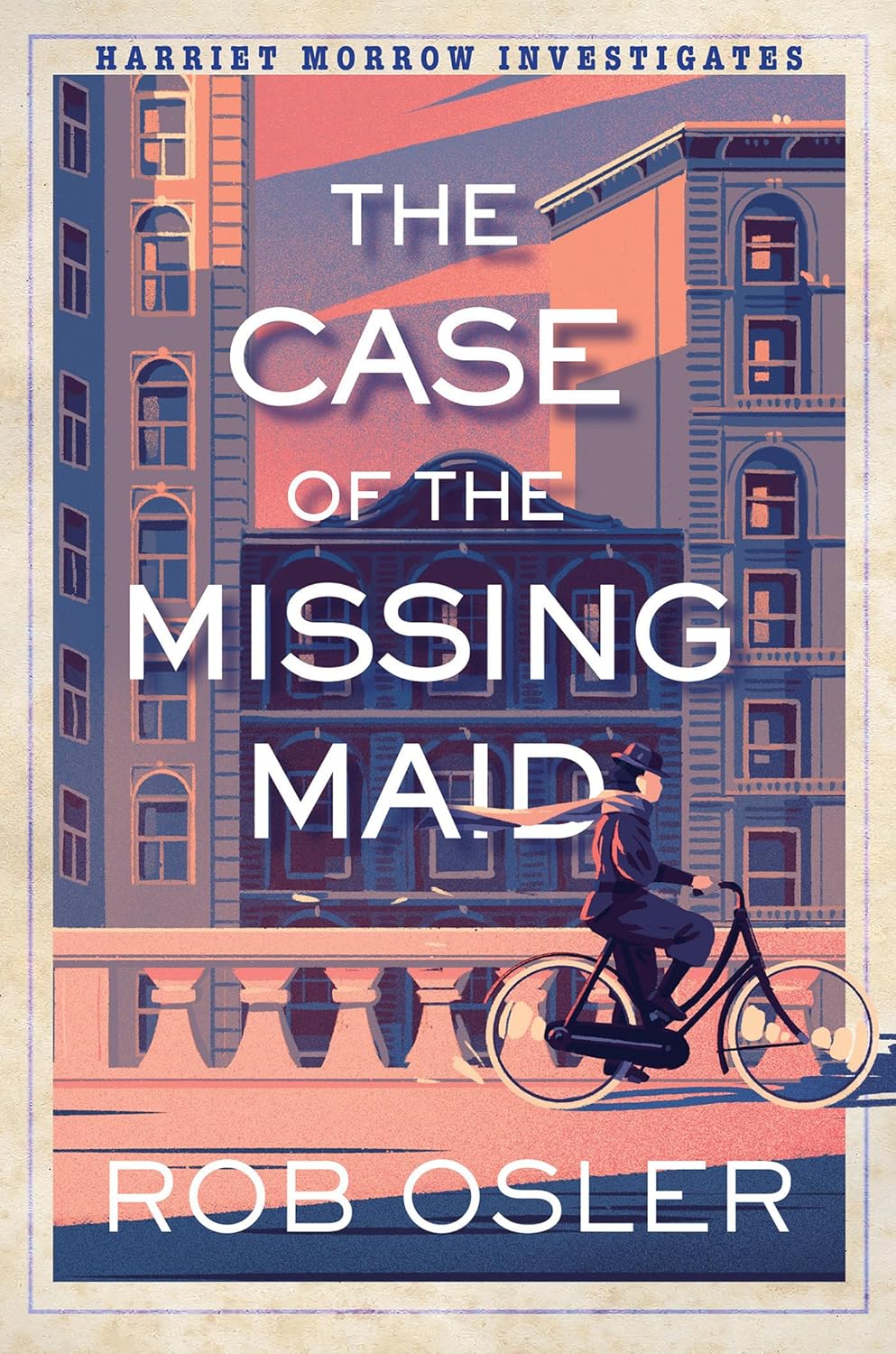
The Case of the Missing Maid by Rob Osler was published in December 2024. Book 2 in the series, The Case of the Murdered Muckracker, is scheduled for release in early 2026.
Our Sleuth: Harriet Morrow, 21, is newly hired as the first female operative at the Prescott Detective Agency in Chicago. She’s got a lot on her plate as she juggles sexism at work, caring for her younger brother and concealing her lesbian identity in an intolerant society.
The Setting: We’re in Chicago in 1898, then the nation’s second-largest city. It’s the turn of the century and a time of tumultuous change, not only in the roles of men and women. Horses and buggies dominate the streets but there’s an occasional car or two and a recently completed elevated train line, now known to Windy City residents as the “El.”
The Premise: On her first day of work, Harriet’s boss assigns her to interview his eccentric neighbor, who’s concerned about her missing maid. It’s not a case, really, more of “a neighborly courtesy,” he tells her. But Harriet finds evidence that maid has been kidnapped and, to the chagrin of her new colleagues, begins a tenacious investigation that winds from spacious mansions to crowded immigrant housing to secret homosexual clubs. There’s a wry sense of humor here too, as you’ll see in the opening lines below, and some sweet romance for young Harriet.
My Take: I read most of this series debut in one sitting, stopping only in the wee morning hours when my ebook hit my face (I’m fine!). This is partly because I so love an unconventional protagonist and Harriet fits the bill, fighting societal norms in her choice of occupation, love, manner and dress (she’s an avid cyclist and prefers men’s clothing for this and other reasons). It’s also because the author has thoroughly done his homework, which he helpfully outlines in an afterword, making the city and its neighborhoods and residents come alive. I typically prefer modern settings over historical, but I eagerly await Harriet’s next adventure.
Opening Lines:
Harriet Morrow considered the fashions of 1898 little improved over the year before. Long bell-shaped skirts and silly, frilly blouses with puffed shoulders continued to emphasize the distinction between the sexes — as if she or anyone else needed reminding who wore the pants. The popular silhouette, wide at top and bottom with a nipped waist, fit Harriet’s midsection as well as a watermelon in a bread box. For reasons both practical and personal, she longed for the simplicity of men’s straight-legged trousers and a white starched shirt.
Heads Up: While the book deals with some serious issues, it follows cozy guidelines in keeping violence, gore and sex off the page.
Etc.: The author, Rob Osler, has received numerous accolades for his first series featuring the debut, Devil’s Chew Toy, which was marketed as “The World’s First Quozy — A cozy mystery shining with a rainbow of
diverse characters.” Harriet Morrow is his second queer detective series.
 FemaleSleuths.com